NBA Same Game Parlay: Bet Builder Strategies and Correlation Traps
 Available in US
The first same game parlay I ever built looked brilliant on paper: Jayson Tatum over 27.5 points, Celtics to win, and the game total over 220.5. All three legs pointed the same direction — Boston’s offence firing on all cylinders — and the combined price was 5/1. It lost when Tatum scored 31 but the game total finished at 214. That bet taught me the most expensive lesson in NBA bet builder strategy: legs that feel connected in your head are not always connected in reality.
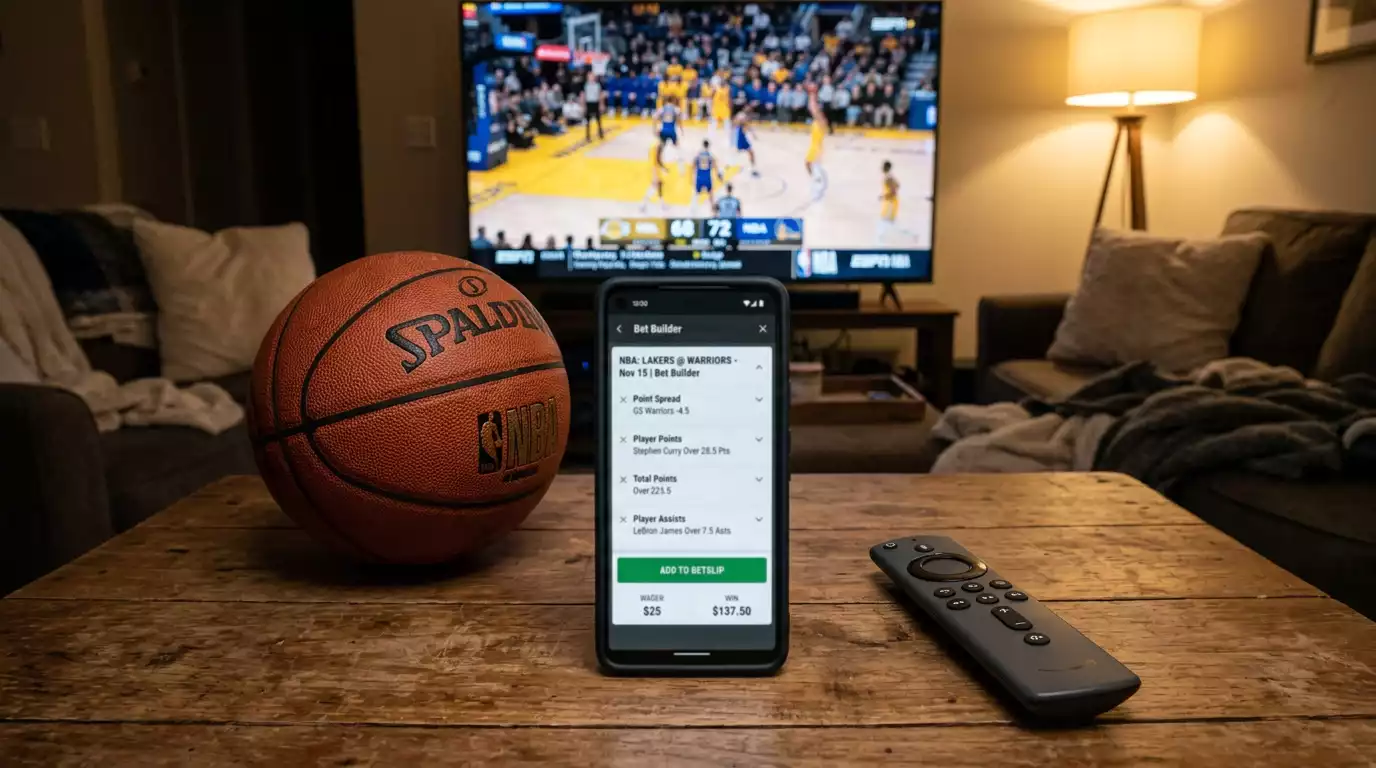
Same game parlays — known as bet builders at most UK bookmakers — let you combine multiple selections from a single NBA game into one bet. The appeal is obvious: higher potential returns than any individual market, the excitement of sweating multiple outcomes simultaneously, and the ability to express a specific “game narrative” through your selections. Live and in-play betting already accounts for 62.35% of online sports betting revenue in the US, and same game parlays are the fastest-growing segment within that — partly because they are genuinely engaging, and partly because they tend to favour the bookmaker’s margin more than bettors realise.
That margin issue is exactly what this guide is about. I am not here to tell you bet builders are a bad idea — I use them regularly. But I have spent years learning which combinations offer genuine value and which ones are traps dressed up in attractive odds. The difference comes down to understanding correlation.
How NBA Same Game Parlays Work
Picture this: you are watching a Wednesday night NBA game, and you have three opinions about how it will play out. LeBron James will score at least 25 points. The Lakers will win. The total will go over 222.5. In traditional betting, those are three separate bets with three separate stakes. A same game parlay bundles them into a single wager where all three must hit for you to collect.
The bookmaker prices each leg individually, then combines them — but not with a simple multiplication. This is where things get nuanced. In a standard multi-game parlay, the outcomes are independent: the Celtics winning has no connection to the Warriors covering their spread in a different game. The bookmaker can multiply the decimal odds directly. In a same game parlay, the outcomes within one game are not independent. If the Lakers win by fifteen, the over is more likely. If LeBron scores 35, the Lakers are more likely to win. These relationships — correlations — mean the true combined probability is different from what you get by multiplying individual probabilities.
UK bookmakers handle this through proprietary correlation models that adjust the combined price. The adjustment almost always works in the bookmaker’s favour, which means same game parlays carry a higher effective margin than single bets or even multi-game accumulators. I have estimated the overround on typical three-leg NBA bet builders at UK operators to be 15-25%, compared to 4-6% on individual match markets. That is a significant headwind, and overcoming it requires you to find legs where the bookmaker’s correlation adjustment is wrong.
Positive and Negative Correlations in Bet Builders
I once tracked 200 consecutive same game parlays posted on social media by NBA betting tipsters. More than 80% of them contained at least one pair of negatively correlated legs — selections that actively work against each other. The most common offender: backing a team to win AND the game total to go under. Think about why those clash. If your team is winning comfortably, the losing team is likely to foul late, extend possessions, and push the total higher. A blowout win and a low total can coexist, but they do so far less often than most bettors assume.
Positive correlation is what you want. Two legs are positively correlated when one outcome makes the other more likely. Here are the strongest positive correlations I have identified in NBA same game parlays. A player’s points over combined with their team winning: if the star player exceeds their scoring line, the team’s chances improve. The game total going over combined with both teams’ individual totals going over: this is almost tautological, but bookmakers sometimes misprice the combined odds. A player’s assists over combined with their team winning: assist totals rise in wins because teammates are converting those passes into baskets.
Negative correlations to avoid: a team winning by a large margin combined with the opposing player’s stat overs — if the team blows out the opponent, the losing team’s starters get benched early and their stats deflate. The game total going under combined with any player’s scoring over — low-scoring games mean fewer possessions and fewer opportunities for individual production. A player’s rebounds over combined with team shooting percentage being high — when a team shoots well, there are fewer missed shots and therefore fewer rebound opportunities.
Basketball occupies 15-18% of global bookmaker activity, and within that slice, bet builders generate some of the highest margins because most bettors ignore these correlations entirely. Recognising them puts you ahead of the crowd immediately.
Building a Data-Informed Same Game Parlay
My approach to constructing NBA bet builders starts with a simple question: what is my core thesis for this game? Not a collection of opinions on separate markets — a single, coherent view of how the game will play out. Everything flows from that thesis.
Suppose my thesis is: “The Pacers will run the Nets off the floor in a high-scoring home win.” That thesis implies Indiana’s pace advantage dominates, the total goes high, and the Pacers’ top scorer benefits from extra possessions. The bet builder writes itself: Pacers moneyline, game total over, and Tyrese Haliburton assists over. All three legs are positively correlated — a fast-paced Pacers win creates more possessions, more transition opportunities, and more assist chances for their primary playmaker.
What I do not do is start from the combined price and work backwards. I see bettors do this constantly — they want a 10/1 payout, so they keep adding legs until the price reaches their target. This is the fastest way to build a losing bet. Each additional leg multiplies the margin against you and introduces another point of failure. My rule: three legs maximum, every leg positively correlated with at least one other leg, and a coherent thesis connecting all of them.
After constructing the parlay, I pressure-test it by asking one question: what scenario makes two legs win but the third lose? If I can easily imagine that scenario, the parlay is weaker than it looks. In the Pacers example, the scenario where Haliburton’s assists go under despite a high-scoring Pacers win would require Indiana to score heavily without Haliburton’s involvement — possible if he is injured or in foul trouble, but unlikely in a normal game. That is an acceptable risk. If the fragile scenario is something mundane and likely, I scrap the bet entirely.
One final consideration: timing. Bet builder prices at UK bookmakers update as individual market lines move, but the correlation adjustments tend to lag. I have found slightly better value building same game parlays early in the day — around 12:00-14:00 GMT for evening US tip-offs — before the late sharp money moves individual lines and tightens the correlation pricing. It is a small edge, but in a market with 15-25% overround, every fraction of a percent matters. For a deeper dive into how props fit within bet builders, the player props strategy guide covers the individual stat markets in detail.
How many legs should an NBA same game parlay have?
I recommend a maximum of three legs. Each additional leg multiplies the bookmaker’s margin against you and adds another variable that must go right. Two-leg combinations with strong positive correlation offer the best balance of enhanced odds and realistic hit rate. Four or more legs may produce attractive headline prices, but the actual expected value drops sharply with every addition.
Do UK bookmakers offer same game parlays for all NBA matches?
Coverage varies by operator. Major UK bookmakers typically offer bet builders for all nationally televised NBA games and most regular-season matchups, but some smaller-market games — particularly early in the season — may have limited or no bet builder availability. Player prop legs are usually the first to be restricted in lower-profile games. Check your bookmaker’s NBA section on the day of the game for current availability.
Created by the ”nba Game Betting” editorial team.