NBA Home Court Advantage: ATS Data, Playoff Trends and Betting Angles
 Available in US
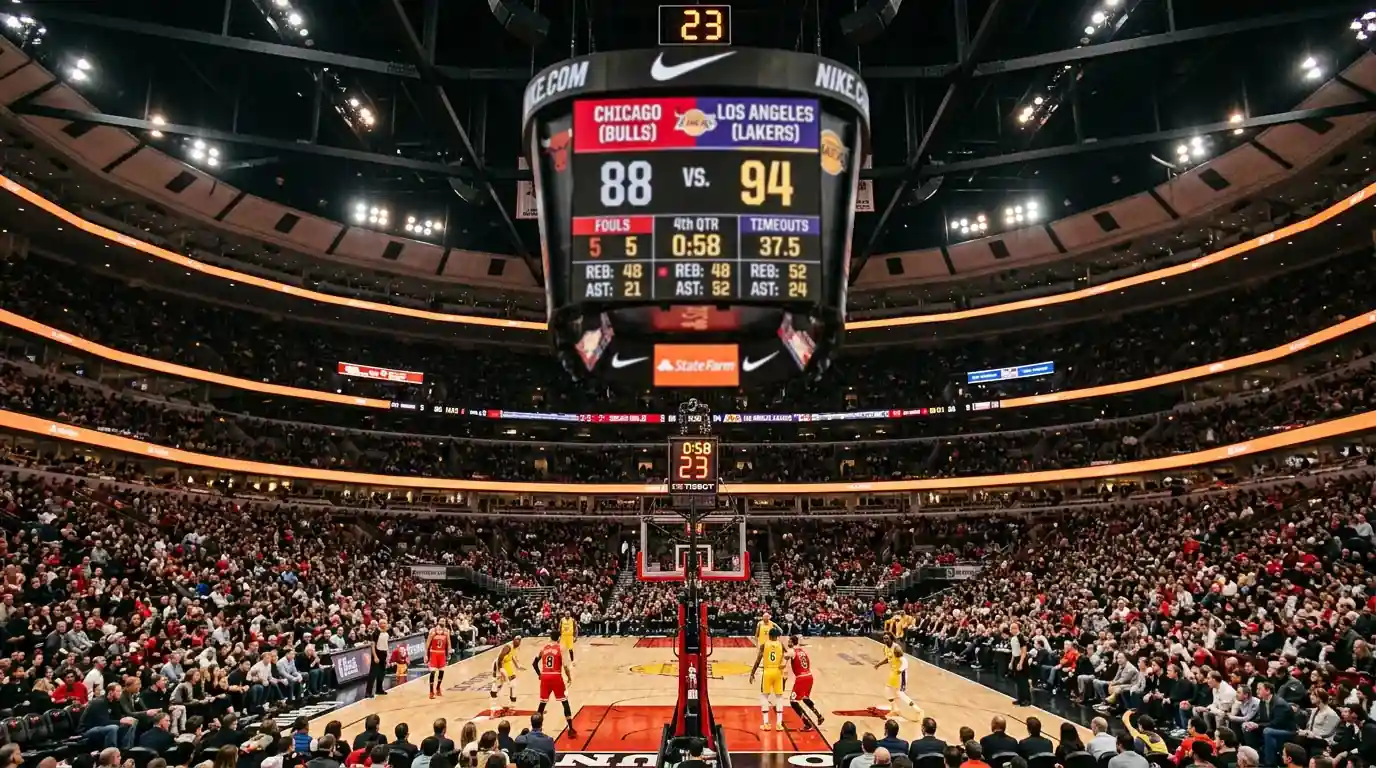
I learned how real home court advantage is the hard way — by betting against it. In 2020, when the NBA played inside the Orlando bubble with no fans, home teams won just 49.8% of games. The moment crowds returned, the home win rate snapped back above 57%. That six-percentage-point swing, driven entirely by spectator presence, permanently changed how I weight location in my models.
Home court advantage in the NBA is not a myth and not a magic formula — it is a measurable, quantifiable factor that varies by arena, by situation, and by stakes. The question for bettors is not whether it exists but whether the bookmaker has already priced it in. The answer, as with most things in betting, is “mostly yes, but not always.” The edges live in the exceptions, and those exceptions follow patterns I have tracked across more than nine years of data.
Home Court by the Numbers: Regular Season vs Playoffs
The aggregate numbers tell a straightforward story: NBA home teams win roughly 57-59% of regular-season games, a rate that has been remarkably stable for decades despite changes in travel, scheduling and playing style. That built-in advantage gets baked into every spread the bookmaker sets — home teams typically receive 2.5-3.5 points of spread adjustment compared to a theoretical neutral-court line.
But averages conceal as much as they reveal. The home advantage is not distributed evenly across all 30 teams. Certain arenas — Denver’s Ball Arena at altitude, Miami’s oppressive late-season heat, and Utah’s notoriously hostile atmosphere — produce home win rates north of 65%. Other venues, particularly those in markets with heavy tourist or corporate attendance, hover closer to 53-54%. The variance matters for bettors because the bookmaker applies a relatively uniform home-court adjustment rather than a team-specific one. If Denver’s true home advantage is worth 5 points but the bookmaker only prices in 3, the remaining 2 points represent value on every Nuggets home game.
The home record that matters most for betting purposes is against the spread rather than outright. Oklahoma City Thunder posted a staggering 69-39 ATS record over two and a half recent seasons — a 64% cover rate — with a significant chunk of that performance coming at home. Orlando was the only other team above 60% ATS in that span at 65-42. These kinds of sustained ATS edges at home are the clearest signal that the market is systematically undervaluing a team’s home-court factor.
Travel Distance and Altitude Effects on NBA Outcomes
When a friend told me he had never considered how far NBA teams physically travel between games, I pulled up a map. The distance from Miami to Portland is roughly 4,300 kilometres — roughly the same as London to Baghdad. Teams make that kind of journey multiple times per season, often with a game the following night. The physical toll is not theoretical; it shows up in the data as measurably worse performance by visiting teams on long road trips.
I categorise travel effects into three tiers. Short-haul trips under 1,000 kilometres — think New York to Philadelphia or LA Lakers to Sacramento — produce minimal fatigue impact. These are bus-ride distances, and the visiting team arrives physically fresh. Medium-haul trips of 1,000-2,500 kilometres introduce modest fatigue, particularly when combined with a back-to-back schedule. Long-haul trips above 2,500 kilometres, especially those crossing two or more time zones, create a measurable dip in visitor performance that persists for roughly 36-48 hours after arrival.
Altitude deserves its own mention. Denver sits at 1,600 metres above sea level, and the thin air genuinely affects visiting players who are not acclimatised. Visiting teams in Denver show elevated turnover rates and reduced defensive intensity, particularly in the third quarter — the period where aerobic fatigue peaks. I add a half-point to Denver’s home spread advantage in my models, and the data supports it: the Nuggets’ home ATS record consistently outperforms their away record by a wider margin than any other team in the league.
For UK bettors, the practical application is straightforward. When you see a road team on the third game of a West Coast trip facing a home team with a strong arena advantage, the spread may not fully capture the cumulative fatigue effect. These spots appear three to five times per week during the regular season, and they are some of the most reliable situational edges I track.
Why Home Court Peaks in Decisive Games
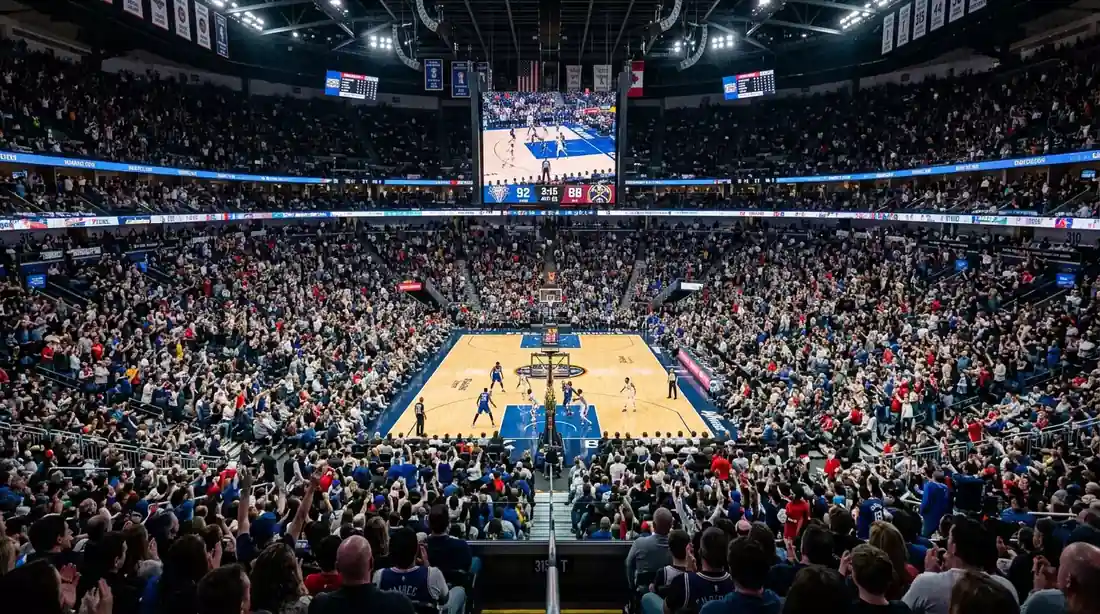
The atmosphere inside an NBA arena during a home Game 7 is unlike anything else in sport. The crowd is not background noise — it is a physical force, measured in decibels, that disrupts communication, accelerates heart rates and tilts marginal calls. Home teams in NBA Game 7 situations hold a historical record of 115-40, a .742 win rate that dwarfs the regular-season home advantage. That is not a small sample fluke. That is 155 games across decades of basketball confirming that when the stakes are highest, the home environment becomes the single most powerful variable in the game.
The reasons stack on top of each other. Travel fatigue compounds over a seven-game series — the visiting team has made three or four cross-country trips by Game 7. Referee tendencies shift subtly in high-pressure home environments; multiple studies have shown a small but consistent increase in home-team free-throw attempts during decisive playoff games. And the psychological burden of winning on the road in an elimination game, against a screaming crowd that wants nothing more than your failure, is something no statistical model fully captures.
For bettors, the implication is nuanced. The bookmaker knows the historical numbers too, so Game 7 home spreads are adjusted accordingly — you will not find a mispriced favourite at 1/4 that “should” be 1/6. The value lies in the secondary markets: home team first-quarter winner, home team first-half spread, and home-player prop overs. These markets are less efficiently priced than the main moneyline or spread because they attract less liquidity and receive less attention from the sharp syndicates that keep primary markets tight.
I apply the same principle to deciding games in shorter series. A team facing elimination in Game 5 or Game 6 at home benefits from a similar, though slightly weaker, version of the decisive-game home boost. The crowd intensity ratchets up, the home team’s effort level peaks, and the visiting team — already potentially thinking about closing out the series at home in the next game — can be caught flat. These are high-variance spots, but when the home team’s season-long data supports their home-court strength, the price often undervalues what happens when desperation meets a friendly crowd. For how these dynamics connect to ATS records and spread strategy more broadly, the spread betting guide covers the full framework.
Is NBA home court advantage stronger in the playoffs?
Yes, significantly. Regular-season home teams win roughly 57-59% of games, while playoff home teams — particularly in decisive games — win at rates above 70%. The combination of crowd intensity, referee dynamics, travel fatigue accumulation across a series, and the psychological pressure on road teams amplifies the home advantage well beyond its regular-season baseline. Game 7 home teams historically hold a .742 win rate across 155 games.
Which NBA arenas have the strongest home court edge for bettors?
Denver consistently ranks at or near the top due to the altitude factor, which creates a physiological disadvantage for visiting teams unaccustomed to playing at 1,600 metres. Miami, Utah and Oklahoma City have also produced strong home ATS records in recent seasons. The key metric to watch is not just home win rate but home ATS performance, which accounts for the bookmaker’s adjustment and reveals whether the market is accurately pricing each team’s home advantage.
Published by the nba Game Betting team.