NBA Over/Under Betting: Totals Markets and Pace-Based Analysis
 Available in US

Most people start their NBA betting life picking winners. I did too. But the bet that actually turned my understanding of basketball markets upside down was a totals wager — an over 218.5 on a Spurs-Grizzlies game in 2019 that finished 89-86. I lost, naturally, but staring at that 175-point final score forced me to confront something obvious: not all NBA games are high-scoring shootouts, and the market knows that better than casual fans do.
Over/under betting — also called totals — asks a fundamentally different question than the moneyline or spread. Instead of caring about who wins, you are predicting whether the combined final score of both teams lands above or below a number set by the bookmaker. Basketball accounts for 15-18% of all global bookmaker activity, and within that slice, totals markets attract a disproportionate share of sharp action because they respond to measurable, predictable variables like pace, efficiency and roster construction.
For UK punters, the totals market has a practical advantage: you do not need deep knowledge of individual team strength or form to find edges. What you need is an understanding of tempo, fatigue and how certain matchups compress or expand the scoring environment. I have spent nine years building models around those variables, and this guide distils the approach into something you can apply from your first bet.
How NBA Totals Betting Works
I remember explaining totals betting to a colleague who follows cricket, and the penny dropped instantly when I framed it this way: imagine the bookmaker sets a total runs line for a Test match innings. You do not care who scores the runs — just whether the combined output crosses a threshold. NBA totals work identically.
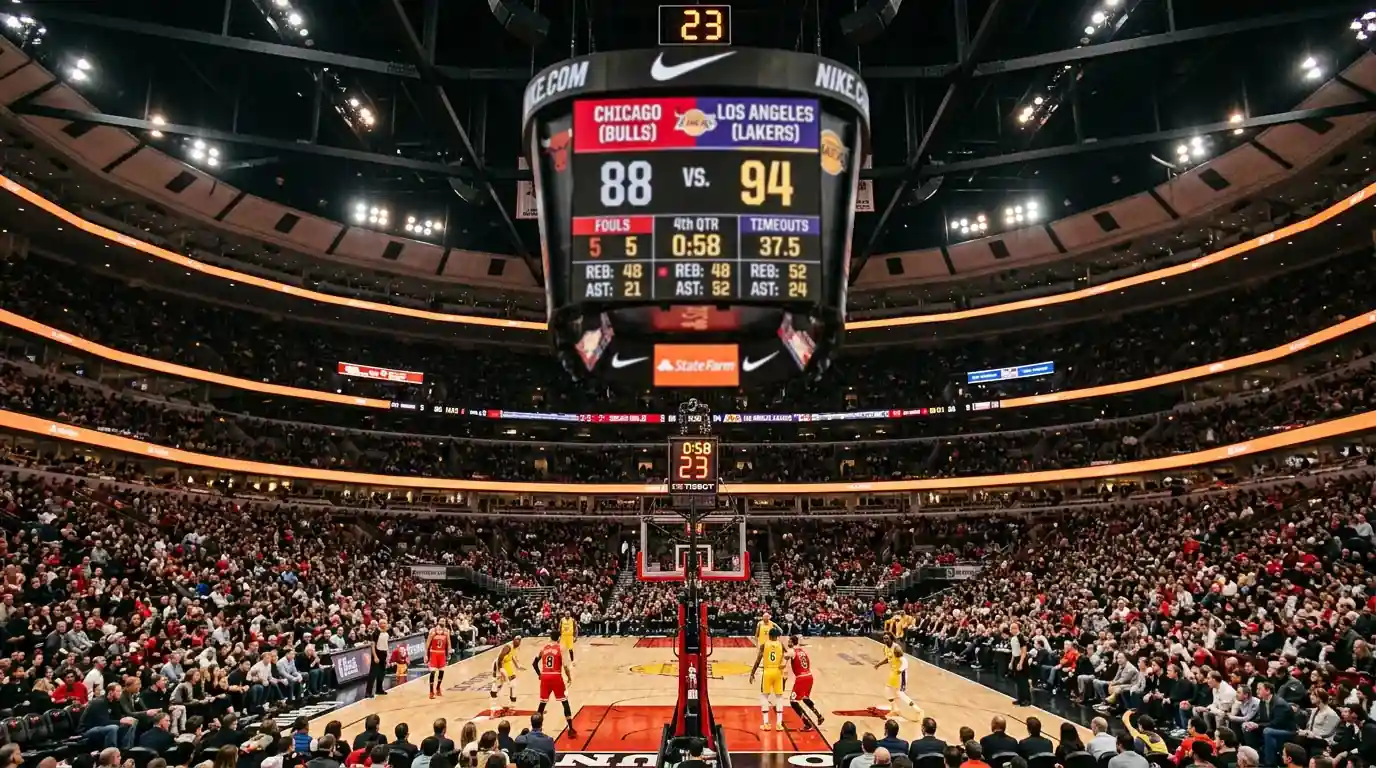
The bookmaker posts a number — say, 224.5 — and you decide whether the combined final score of both teams will be over or under that figure. If the game finishes 118-110 (total: 228), the over wins. If it finishes 105-108 (total: 213), the under wins. The half-point eliminates the possibility of a push, so every bet settles one way or the other.
Pricing on both sides typically sits close to even money — you will see something like 10/11 on both over and under at most UK bookmakers, with the slight deviation from even reflecting the operator’s margin. That near-symmetrical pricing means the bookmaker is not taking a strong view on direction; they are setting the number where they expect roughly equal action on both sides. Your job is to find games where that number is wrong.
A key detail for UK bettors: NBA totals include overtime. If a game goes to extra periods, those additional points count towards the total. This matters because overtime adds roughly 8-12 points on average, which can swing a close total from under to over. Games between evenly matched teams — the ones most likely to reach overtime — deserve special attention when the posted total sits right at the market consensus.
One more mechanical point. Most bookmakers offer alternative totals alongside the main line. You might see 224.5 as the primary total, but also options at 220.5, 216.5, 228.5, and 232.5 at adjusted prices. These alternatives let you express stronger convictions about how a game will play out, and they are especially useful when your analysis suggests the total is significantly mispriced.
Pace and Its Direct Impact on Game Totals
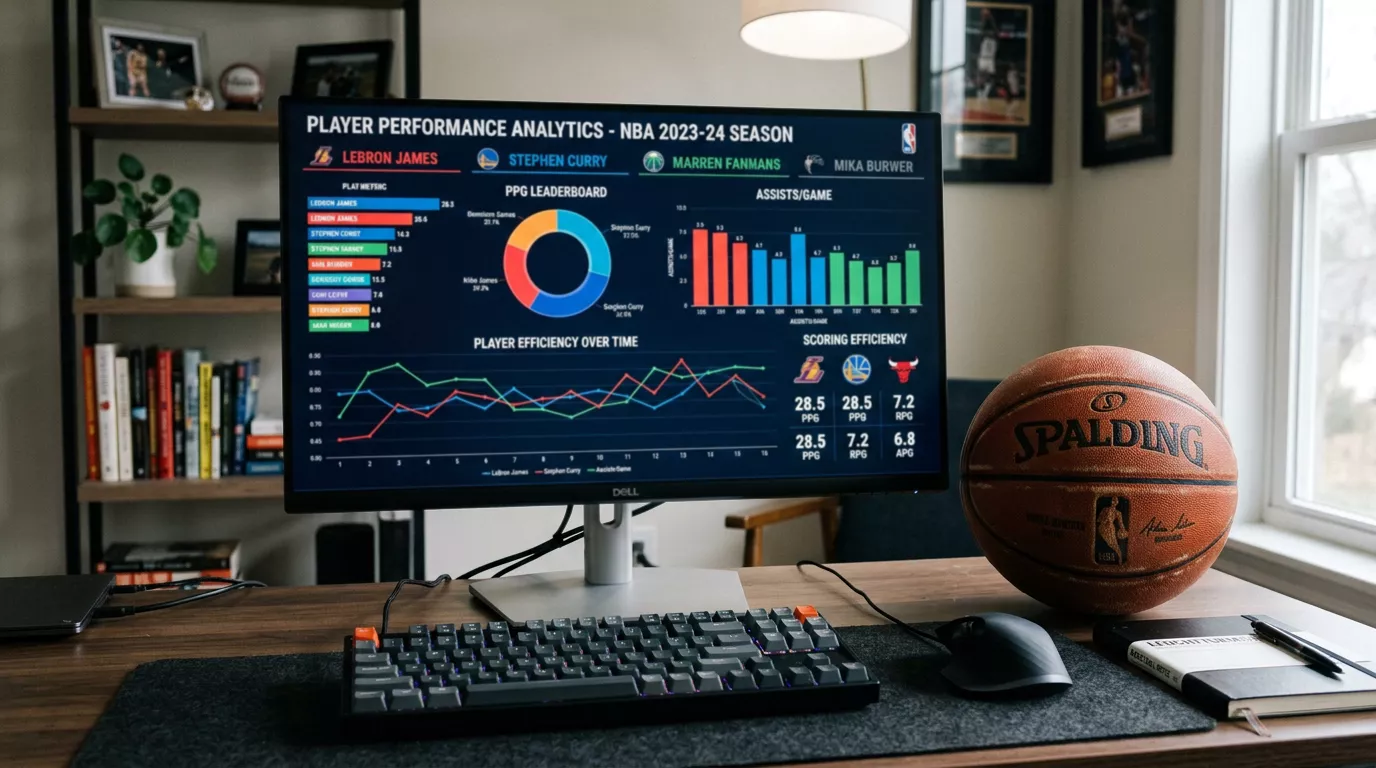
Every NBA totals model I have ever built starts with one number: pace. Not points per game, not offensive rating, not shooting percentages — pace. It measures how many possessions a team uses per 48 minutes, and it is the single most reliable predictor of where a game’s total will land.
Think of it this way. Two teams that each average 100 possessions per game will produce roughly 200 total possessions when they meet. Two teams averaging 95 possessions will produce around 190. Those ten extra possessions, at league-average efficiency of about 1.12 points per possession, translate to roughly 11 additional points. That is the difference between a 220 total and a 231 total, and it is driven entirely by tempo rather than talent.
Where this gets interesting for bettors is the matchup context. A fast team playing a slow team does not simply average out to a medium pace. The slower team usually controls tempo because defence dictates pace more than offence does. When the Sacramento Kings (historically one of the fastest teams) visit the New York Knicks (historically methodical), the game almost always plays closer to the Knicks’ preferred tempo. If the bookmaker has set the total based on a simple average of both teams’ scoring outputs, they have likely set it too high.
I track pace differentials for every matchup and compare them against the posted total. When my model suggests the true total should be three or more points away from the market line, I have a bet. Over the past four seasons, that threshold has produced a hit rate above 55% on totals — modest, but enough to generate consistent profit at near-even-money prices. If you want to take this analysis further with shooting metrics and efficiency stats, the rest days and back-to-back guide covers how fatigue interacts with pace in ways that move totals.
Fatigue, Altitude and Situational Angles for Totals
Denver nearly broke my model. I spent an entire season wondering why my under bets in Denver kept losing until someone pointed out the obvious: the altitude. The thin air at 1,600 metres above sea level genuinely affects game pace and scoring. Visiting teams that fly in the night before — particularly those coming from sea-level cities — show measurably higher turnover rates and lower defensive intensity in the first half. The result is more possessions, sloppier possessions, and higher totals.
Altitude is one situational angle. Fatigue is another, and it is far more broadly applicable. NBA teams playing the second night of a back-to-back show consistent scoring drops, but the pattern is not symmetrical. Defensive effort deteriorates more than offensive execution, meaning back-to-back games tend to produce slightly higher totals than the market expects — especially when the tired team faces a fast-paced opponent happy to push tempo against a weakened defence. Home teams in NBA playoff Game 7 situations hold a .742 historical win rate, and those games tend to be lower-scoring, defensive battles driven by intensity that the regular season rarely matches. That same principle applies in reverse: late-season games between eliminated teams often produce bloated totals as neither side defends with any urgency.
Travel distance is the third angle I track. A team flying from Miami to Portland — crossing three time zones and covering 4,300 kilometres — performs differently than a team bussing from Brooklyn to Philadelphia. The effect is modest individually, but when travel stacks on top of a back-to-back on top of an altitude change, the cumulative impact on scoring is significant. I flag any game where one team has travelled more than 3,000 kilometres in the preceding 48 hours and cross-reference with the posted total.
The mistake most bettors make with situational angles is treating them as standalone systems. Fatigue alone is not enough to bet a total. Altitude alone is not enough. But when pace data points in one direction and two or three situational factors confirm it, you have a genuinely informed opinion rather than a guess. That is the difference between gambling and analysis, and it is the difference between bettors who grind a small edge and those who simply hand their money to the bookmaker one total at a time.
Totals betting rewards patience and process. You will not find value in every game, and some nights the market is simply right. But when pace, fatigue and situational context align, the totals market offers edges that are measurable, repeatable and — unlike many aspects of NBA betting — genuinely learnable for anyone willing to do the work.
What does ‘push’ mean in NBA totals betting?
A push occurs when the combined final score lands exactly on the posted total — for example, a total of 224 with a final score of 112-112 after overtime. Most NBA totals use half-points (224.5) to eliminate pushes, but whole-number totals occasionally appear. When a push happens, your stake is returned in full with no profit or loss.
Do NBA totals include overtime scoring?
Yes. All standard NBA totals bets include any overtime periods. If the game goes to overtime, those extra points count toward the combined total. This is particularly relevant for over bets, since overtime typically adds 8-12 points to the final combined score. Some bookmakers offer regulation-time-only totals as an alternative market, so check the specific terms if overtime exclusion matters to your strategy.
Prepared by the nba Game Betting editorial staff.